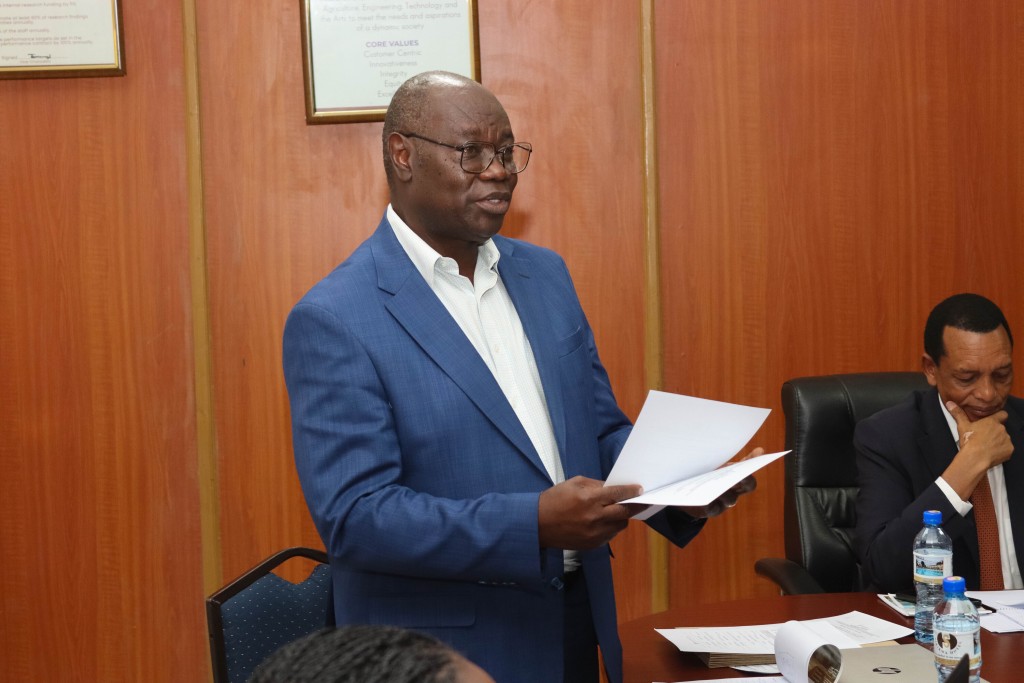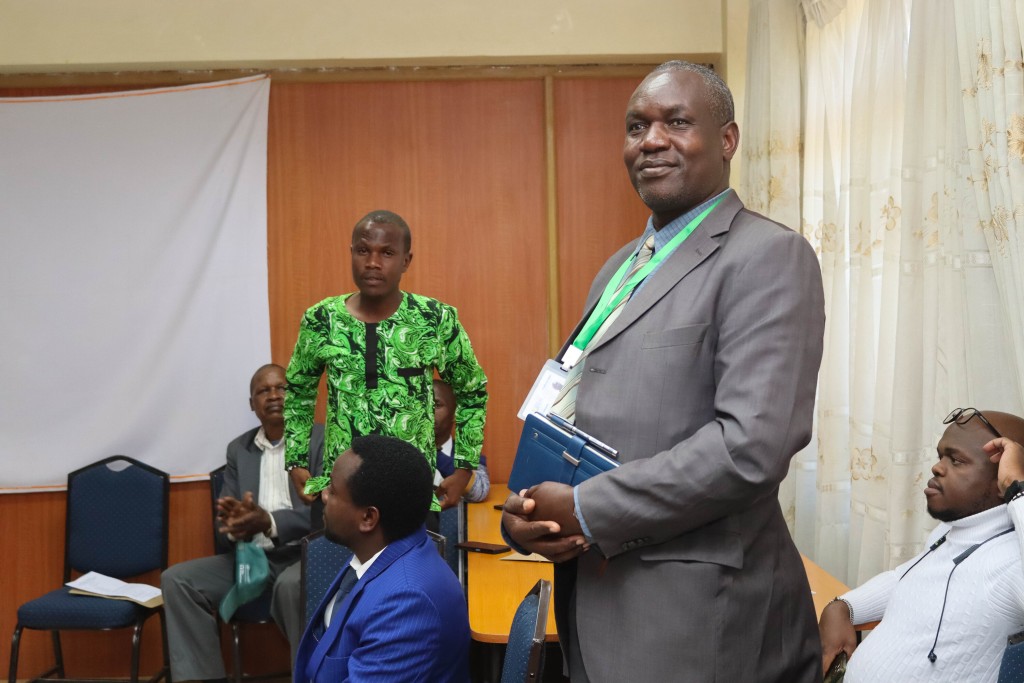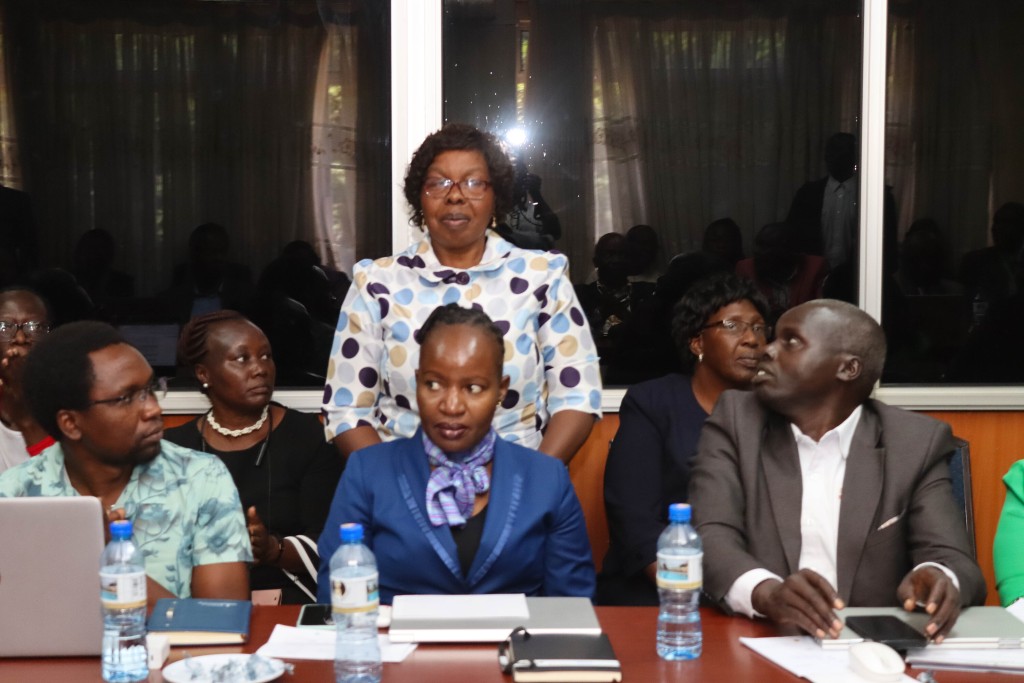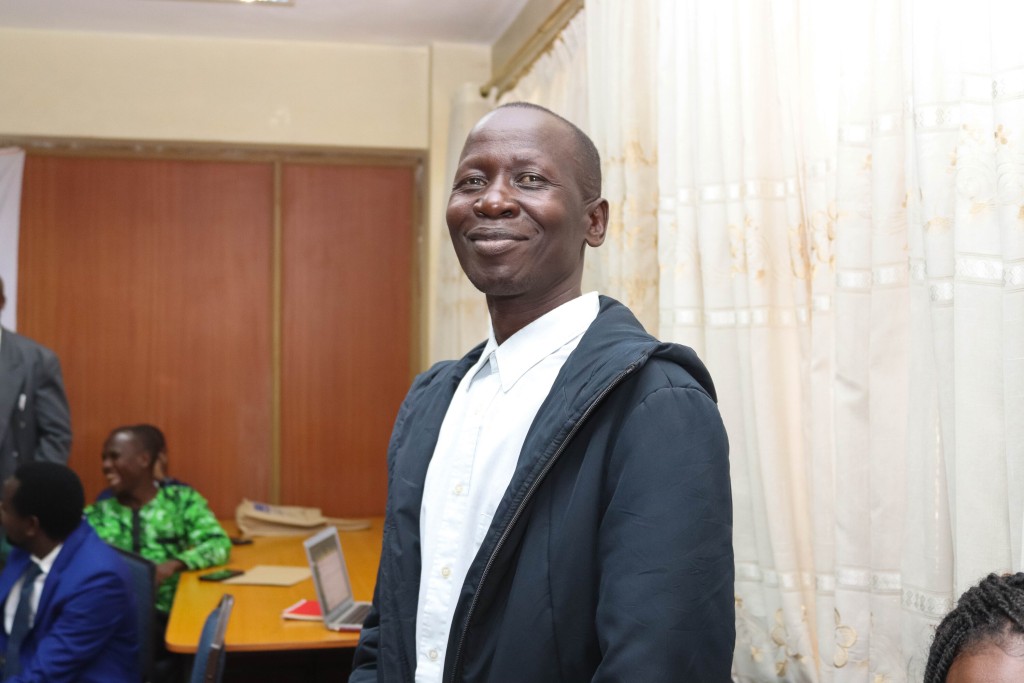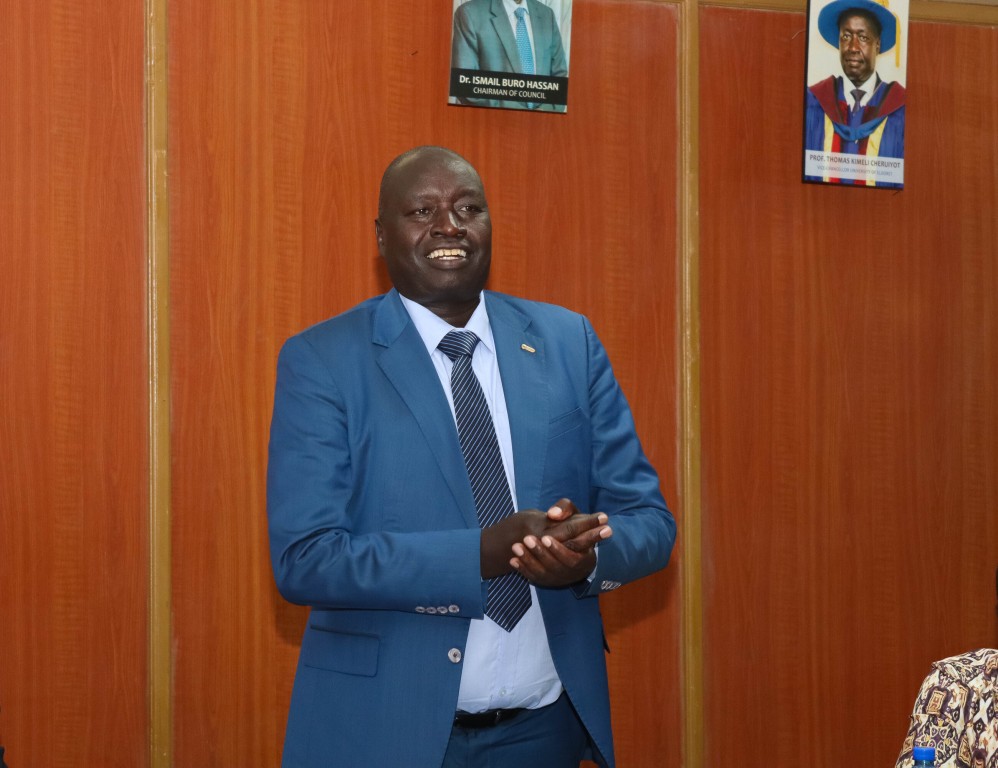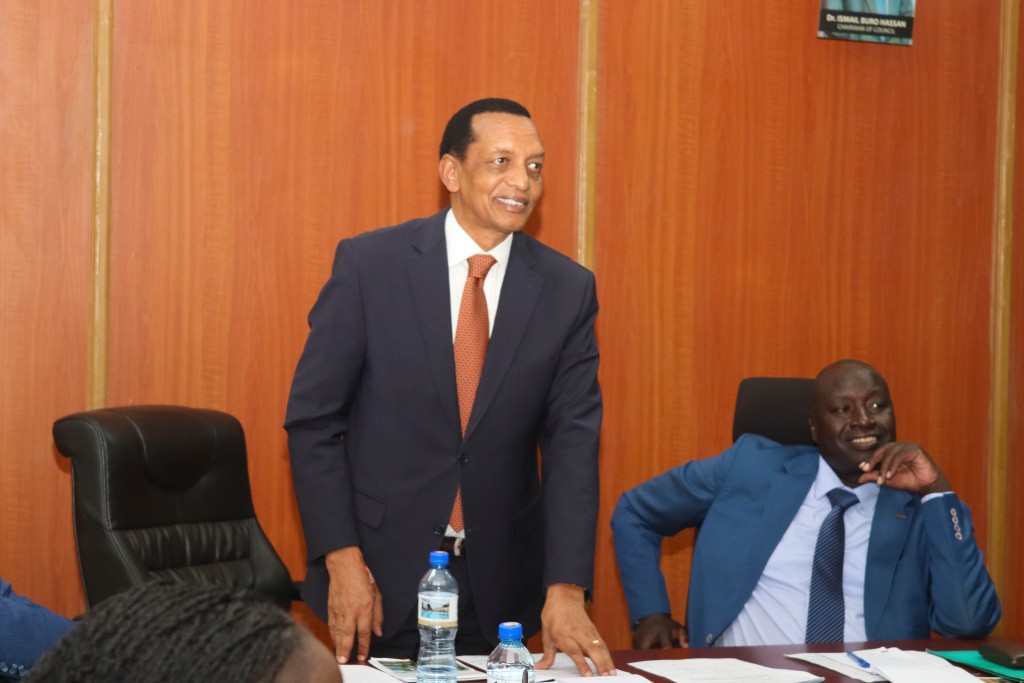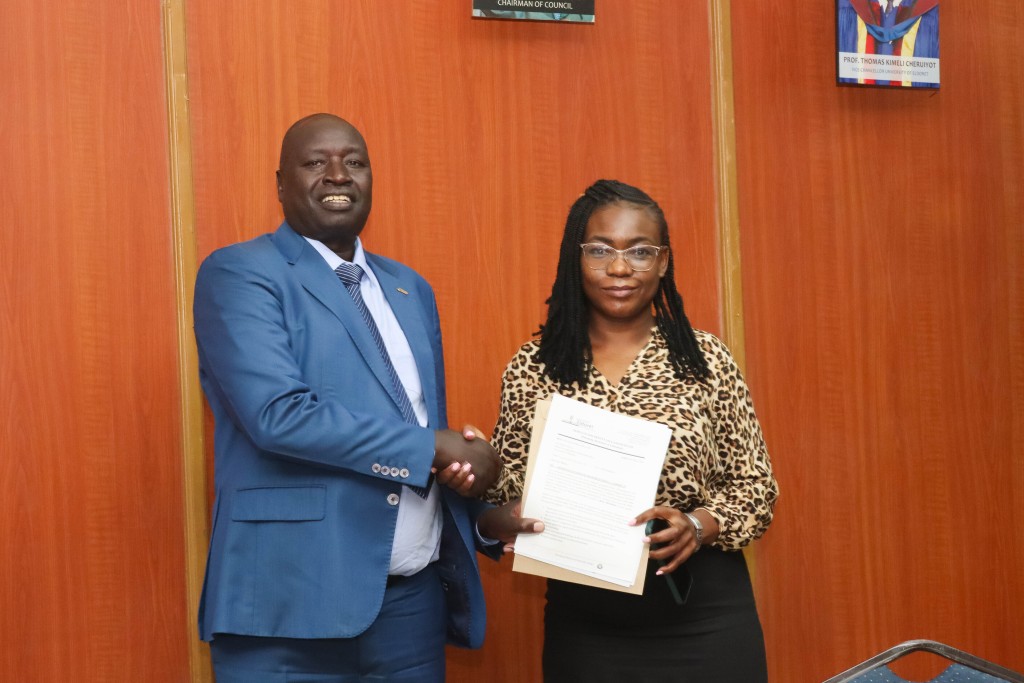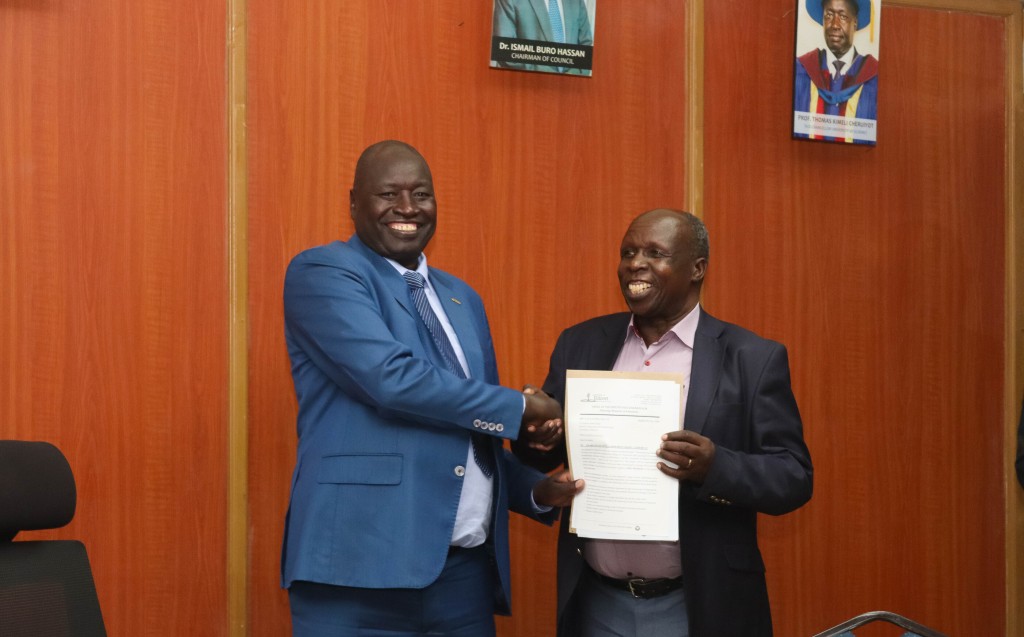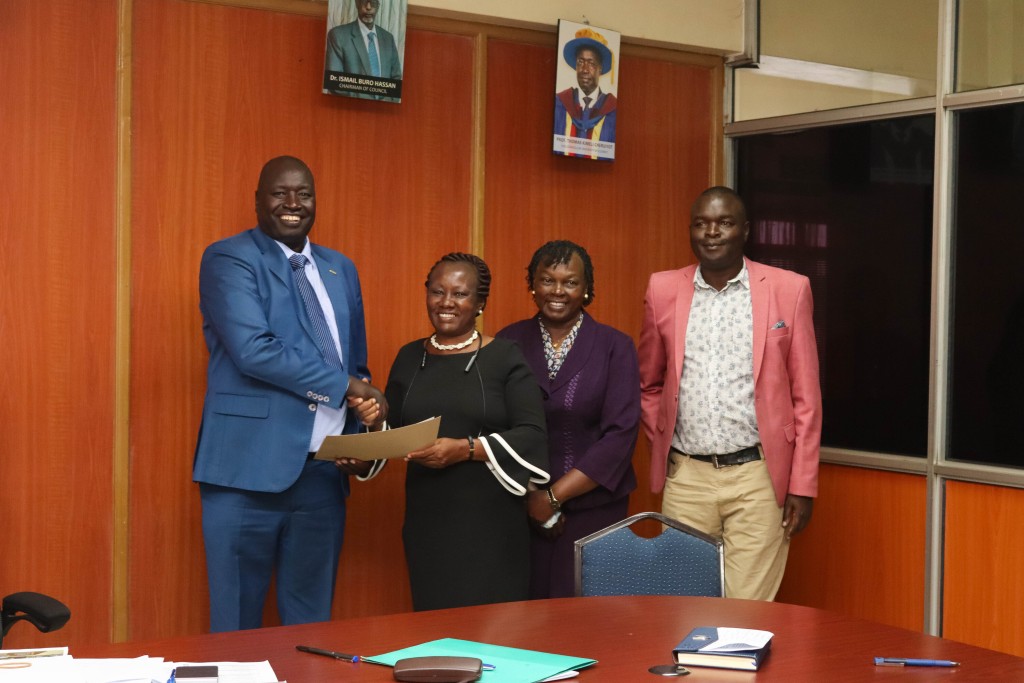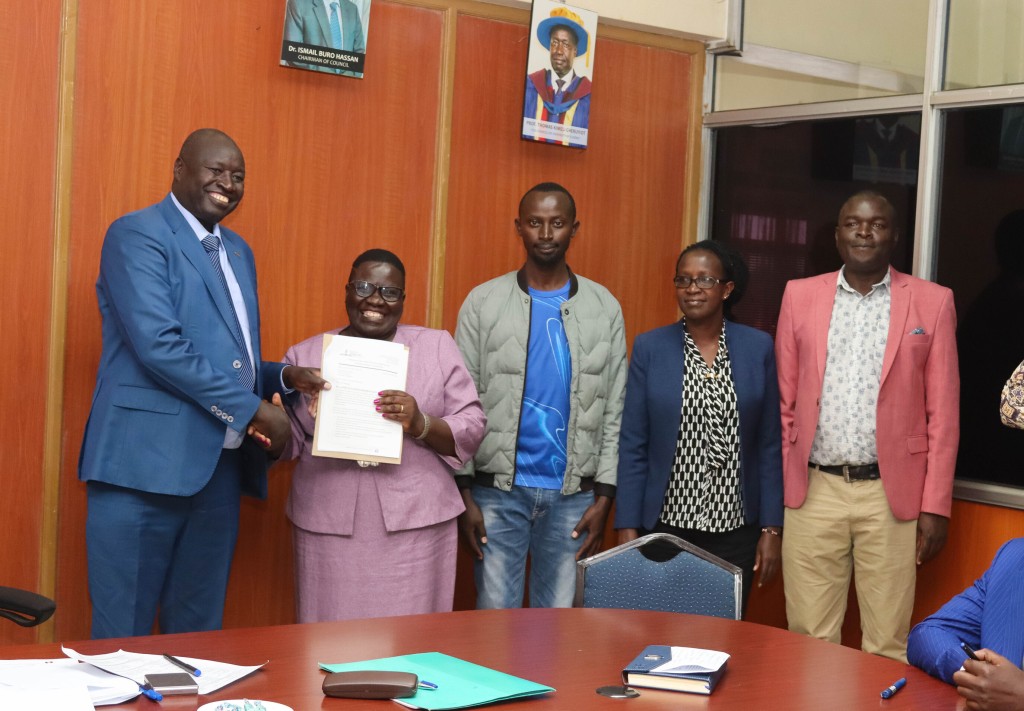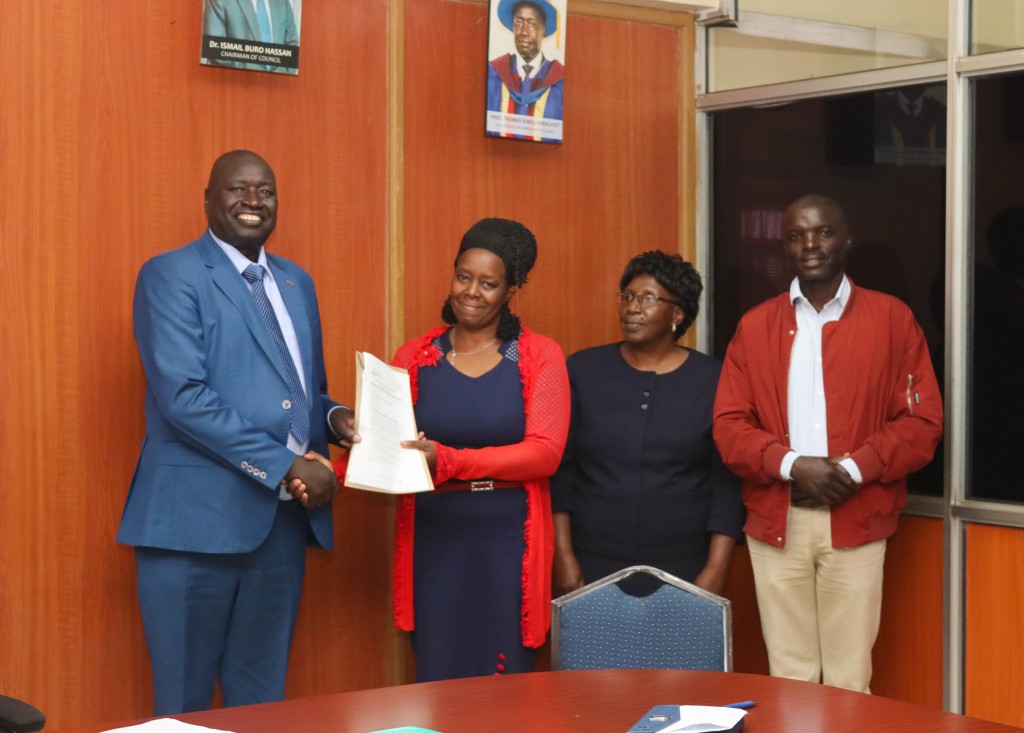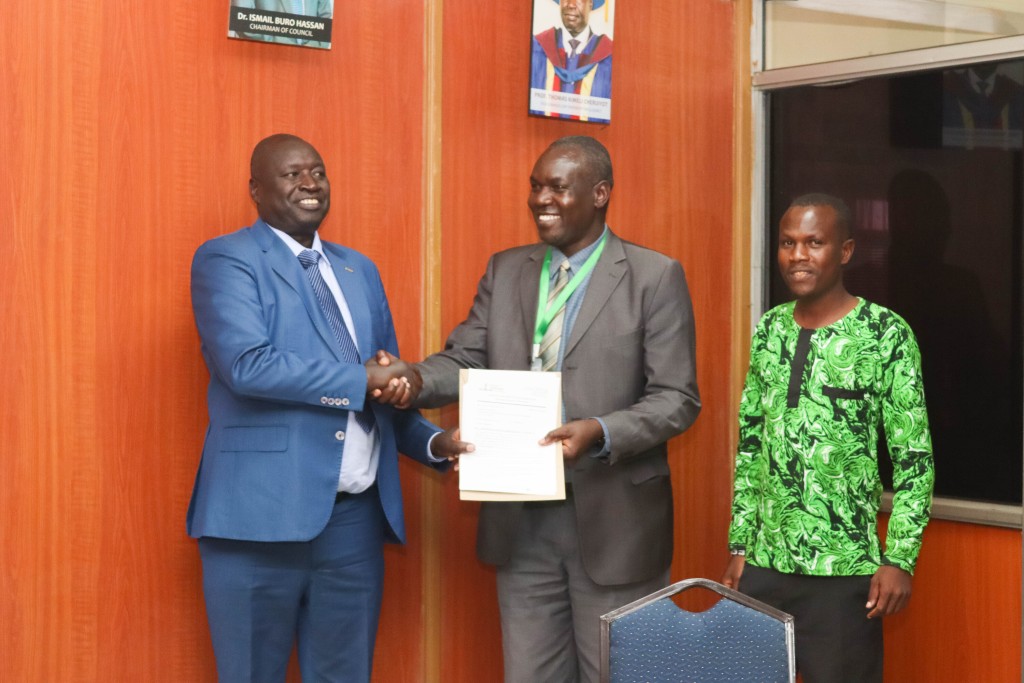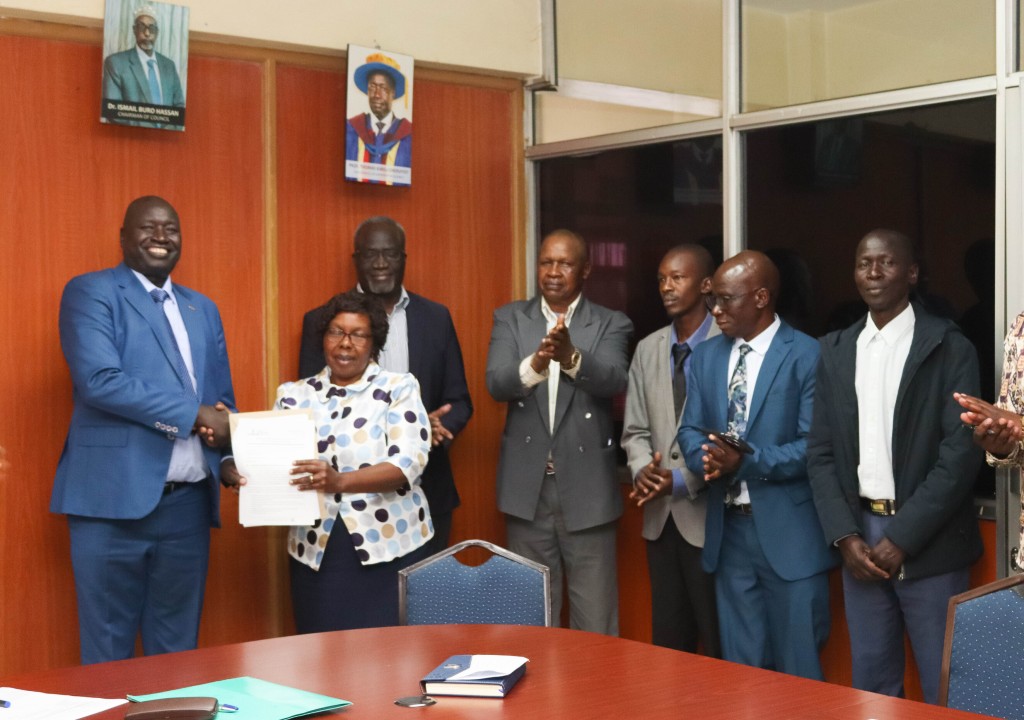

The University of Eldoret, on Friday, 12th June 2026, held the Annual University Research Grants (URG) Cohort 10 Awards and Research Agreement Signing Ceremony, reaffirming its commitment to fostering a vibrant research culture and supporting innovative solutions to societal challenges.
The ceremony was graced by Dr Parmain ole Narikae, Chairperson of the Finance, Planning, Resource Mobilization and General-Purpose Sub-Committee of the University Council, and Prof. Thomas Kimeli Cheruiyot, Vice-Chancellor. The event brought together University Management, researchers, and grant awardees to celebrate the successful completion of the competitive grant selection process and the commencement of the funded research projects.
Speaking during the ceremony, the Deputy Vice-Chancellor (Planning, Research and Extension) congratulated the awardees of the 10th cycle of the URG Programme. He disclosed that a total of 32 research proposals were submitted for consideration and underwent a rigorous review process by independent reviewers. Following the reviewers' evaluation and recommendations, the proposals were forwarded to the University Research and Innovations Board, which approved the top 11 proposals for funding, with each project receiving up to KSh. 500,000.
It was noted that researchers from five of the University's eight Schools benefited from the grants, demonstrating the institution's growing research capacity and multidisciplinary approach to addressing societal challenges. Researchers were reminded of the importance of maintaining the highest standards of research integrity and strict adherence to ethical principles and compliance with all regulations set by the National Commission for Science, Technology and Innovation (NACOSTI), including the acquisition of mandatory research permits before commencing data collection.
The awardees were advised to complete their projects within the stipulated one-year grant period. In addition, each research team is expected to produce at least one publication in a reputable peer-reviewed journal and develop at least one innovation with commercialization potential capable of addressing real societal needs and present at an international conference.
The Principal Investigators (PIs) were reminded to view the funding as a seed grant towards building stronger research portfolios that would enhance their competitiveness for larger national and international funding opportunities. He further challenged the researchers to actively pursue external grants and contribute to expanding the University's research portfolio.
The funded projects in Cohort 10 fall under key thematic areas aligned with national development priorities, including Food and Nutritional Security, Universal Health Care, Manufacturing and Affordable Housing, Governance and People-Centred Development, and Climate Change and Natural Resource Management (Beneficiaries in Table below).
Addressing the gathering, the Vice-Chancellor congratulated all the successful awardees and commended the University Research and Innovations Board for ensuring a transparent and competitive selection process. He noted that the University Management would consider increasing the annual allocation for internal research grants in future cycles to support a larger number of competitive proposals.
The Vice-Chancellor explained that the grants are financed through research administration costs generated from externally funded projects attracted by University researchers. He therefore urged the awardees to actively compete for external funding opportunities and contribute to growing the University's research ecosystem and resource base.
In his remarks, Dr Parmain ole Narikae congratulated the successful researchers and observed that all the funded projects fall within thematic areas that support the Government's Bottom-Up Economic Transformation Agenda (BETA). He challenged researchers to ensure that their projects result in tangible products and practical solutions that positively impact communities and industry.
Dr Narikae further announced that the top three performing projects will be considered for presentation before the University Council, providing an opportunity for researchers to showcase the outcomes and impact of their work. He emphasized that research remains a critical resource mobilization strategy for the University and has immense potential to generate significant resources, enhance institutional sustainability, and strengthen the University's national and international standing. He therefore encouraged all researchers to actively pursue external grants and partnerships.
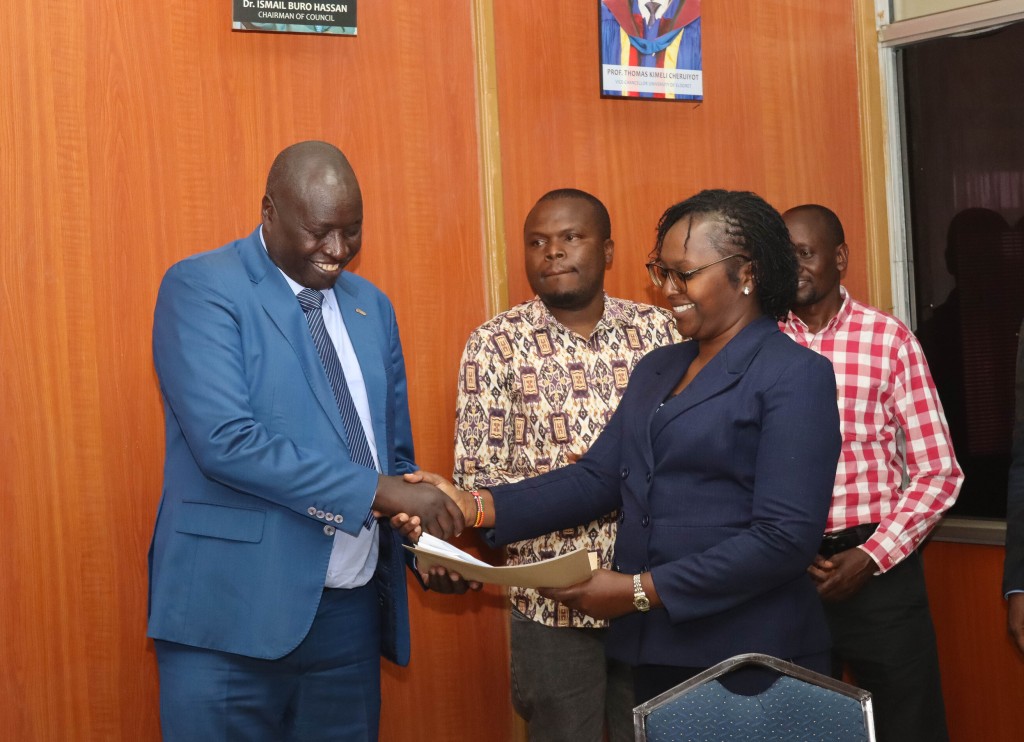
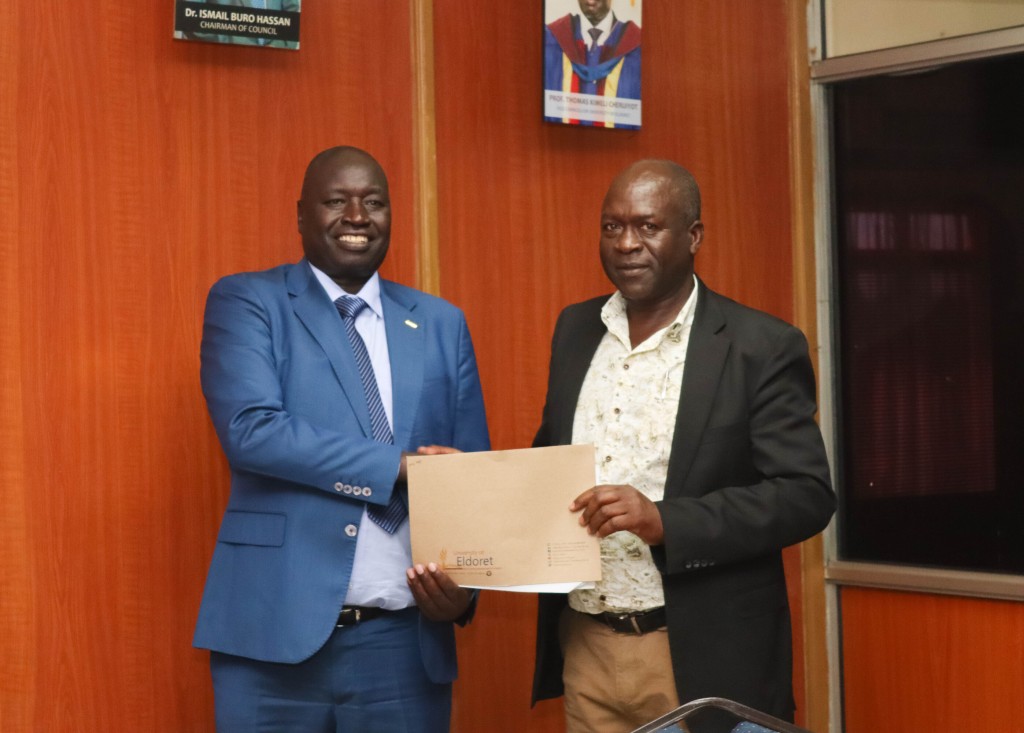
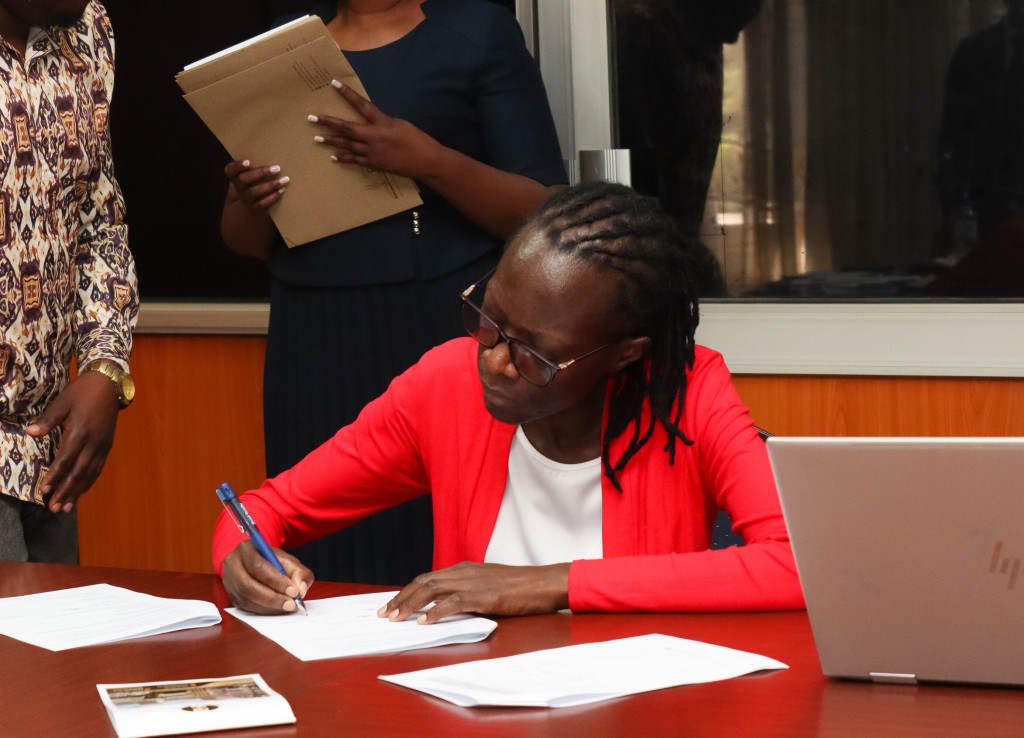
The ceremony culminated in the signing of research agreements by the PIs, officially launching the implementation of the UoE Annual Research funded projects. The University reaffirmed its commitment to supporting high-impact research, innovation, and knowledge generation that contributes to national development and global scientific advancement.
APPENDIX I: SUCCESSFULLY FUNDED RESEARCH PROJECTS – URG COHORT 10
| SNo. | Research team | Type of Research | Research Title | Amount awarded (KES) |
|---|---|---|---|---|
| FOOD AND NUTRITIONAL SECURITY | ||||
| 1. | Dr. Pamela Mwikali (PI) Dr. George Ariya Mr. Timothy Kiprop Kiagu | Applied | Development and validation of UOE FAW- BioShield-MZTM: A vermijuice-enhanced endophytic Beauveria bassiana platform for climate-smart Fall Armyworm management in maize (BioShield-MZ) | 500,000 |
| 2. | Prof. Nicholas Rop (PI) Dr. Arusei Chebet Dr. Pamela Mwikali Mr. Timothy Chemweno | Applied | Evaluating the impact of plant lesion nematode on the finger millet production and design a biologically based management strategy | 500,000 |
| 3. | Dr Eunice Mewa (PI) Dr. George Ariya Ms. Betty Akeno Sike | Applied | Development and Sensory Evaluation of Low-Cost Granulated Stevia Sweetener for Sugar Reduction in Food Systems (LoGraS Project) | 500,000 |
| 4. | Dr. Jackson Kibet Kitilit (PI) Dr. George Ariya Mr. Peter Wanjau | Applied | Transforming Cabbage Post-harvest waste into climate-smart Silage for improved dairy productivity among smallholder farmers in Kenya (CaPS-Dairy) | 500,000 |
| 5. | Dr. Stella C. Barsulai (PI) Dr. Julie Makomere Dr. Julius Kipruto Koech Chepkoech Charlotte | Applied | Adoption of Artificial Intelligence in Food Production in Selected Counties in Kenya | 500,000 |
| 6. | Dr. Fidelis Samita (PI) Dr. Enos Wambu Ms Violet Gudima Dr. Pascaline Jeruto Prof. Elias Ucakuwun | Applied | Systematic Profiling and Chemometric Assessment of Bioactive Phytochemicals in Selected Neglected African Indigenous Vegetables from Western Kenya | 500,000 |
| UNIVERSAL HEALTH CARE | ||||
| 7. | Dr. Mispah Werunga (PI) Dr. Emily J. Chemoiwa Dr. Julius Koech Enoes Kipngetich | A Mobile Application For Mapping Acoustic Calls In Kenya: A Tool for Monitoring Species Diversity and Abundance of Anuran | 494,840 | |
| MANUFACTURING AND AFFORDABLE HOUSING | ||||
| 8. | Eng. Dr Solomon Mulindi (PI) Dr. Frankline Mwiti Mr. Evans Omondi Mr. Harison Tarus Ms. Mary Kipsang | Applied | Development and Performance Evaluation of Modified Ambient Condition Facility for Storage of Irish Potato (Solanum tuberosum) | 500,000 |
| GOVERNANCE AND PEOPLE-CENTERED DEVELOPMENT | ||||
| 9. | Dr Lucy Wanjohi (PI) Dr. Mary Rono Dr. Judith Khazenzi Mr. David Samoei Mr. Samson Odhiambo Deborah Nyambariga | Applied | Prevalence of Anopheles stephensi in Busia Town, Kenya | 456,500 |
| CLIMATE CHANGE AND NATURAL RESOURCE MANAGEMENT | ||||
| 10. | Dr. Kenneth Odhiambo (PI) Mr. Lolimo Festus Ms. Sharon Auma | Applied | Investigation of Allelopathic Effects of Native Plant Species on Invasive Prosopis juliflora | 499,600 |
| 11. | Dr. Salinah Rono (PI) Prof. Donald Otieno Dr. Martin Wetungu Mr. Dennis Onyango Mr. Dennis Onyancha Dr. Julius Kiprono | Applied | Anticancer and Antimicrobial Potential of Tylosema fassoglense (Kotschy ex Schweinf.), Hydnora abyssinica A. Br., and Plectranthus cyaneus Gürke in North Rift, Kenya | 500,000 |
| Grand Total | 5,450,940 | |||
Image Gallery